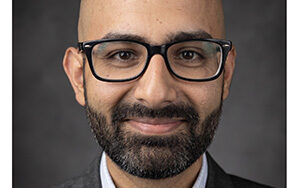

Yechezkel “Chez” Rabinovich, CTO and co-founder at Groundcover, joins SE Radio host Brijesh Ammanath to discuss the key challenges in migrating observability toolsets. The episode starts with a look at why customers might seek to migrate their existing Observability stack, and then Chez explains some approaches and techniques for doing so. The discussion turns to OpenTelemetry, including what it is and how Groundcover helps with the migration of dashboards, monitors, pipelines, and integrations that are proprietary to vendor products. Chez describes methods for validating a successful migration, as well as metrics and signals that engineering teams can use to assess the migration health.
Brought to you by IEEE Computer Society and IEEE Software magazine.
Show Notes
Related References
Related Episodes
- SE Radio 556: Alex Boten on Open Telemetry
- SE Radio 507: Kevin Hu on Data Observability
- SE Radio 675: Brian Demers on Observability into the Toolchain
- SE Radio 591: Yechezkel Rabinovich on Kubernetes Observability
Transcript
Transcript brought to you by IEEE Software magazine.
This transcript was automatically generated. To suggest improvements in the text, please contact [email protected] and include the episode number and URL.
Brijesh Ammanath 00:00:18 Welcome to Software Engineering Radio. I’m your host, Brijesh Ammanath. Today I will be discussing Observability Tool Migration Challenges with Yechezkel Rabinovich, also known as “Chez.” Chez is the CTO and Co-founder at Groundcover, which provides full stack observability for Kubernetes. Chez was previously the chief architect at the Healthcare Security Company Cyber MDX and spent eight years in the cybersecurity division of the Israeli Prime Minister’s office. Chez is a repeat guest at Software Engineering Radio having previously spoken about Kubernetes Observability in Episode 591. Chez, welcome to the show.
Yechezkel Rabinovich 00:00:56 Thank you. Thank you for having me.
Brijesh Ammanath 00:00:57 Today we’ll be talking about what are the challenges and what are the techniques one uses to migrate observability tools. Before we jump into the topics, I just wanted to touch on a few episodes where we have covered observability, previous teams, software engineering radio, so Episode
556 where Alex Boten spoke on Open Telemetry, Episode 507 where Kevin Hu spoke about Data Observability and Episode 675 where Brian Demers spoke on Observability into the Tool Chain. Quite good episodes to refer back to understand more details about observability. Let’s start with what drives the need for firms to migrate from the existing observability tool set? Do you have a story or an example where a firm needed to migrate from their existing observability tool set?
Yechezkel Rabinovich 00:01:47 Yeah, actually a lot. Basically, every customer of Groundcover, not all of them, but most of them are coming from some legacy vendors. Most R&Ds already use observability platform. So, when they want to move to the new observability platform, more modern that rely on bring your own cloud and EBPF, the main challenge is how do we migrate all the hard work we did as an R&D organization, right? You can think about it as dashboards, right? Most of R&D has some kind of top 10, top 20, we often see hundreds of dashboards across the entire R&D. It could be monitors. So, imagine that you rely on specific alerts to wake you up at night to make sure your software is actually behaving as you expect it to be and that your customers get their SLAs. And it also could be integrations that you did or even observability pipeline configurations. All those configurations and integrations have been in the work for maybe five, 10 years from different people in the organization. Some of them already left. So even the knowledge of what we have is sometimes missing. So, all of that makes the decision to move forward to new observability platform a lot more challenging.
Brijesh Ammanath 00:03:17 Right. So, it’s a challenging problem, but what is the primary driver? Do you have an example where a customer came to you to Groundcover and said, because of these reasons, we wanted to move from our legacy observability tool set?
Yechezkel Rabinovich 00:03:32 Yeah, we recently had a customer with a thousand monitors, which they didn’t know how they built it. So, the people that created those monitors are no longer in the organization. So, imagine how frightened it is to now trying to migrate those monitors without knowing if what you’re doing is actually the right thing. There is no way. So, let’s take a simple example of think about monitors that alert when specific log happens. It could be like a free text search, it could be specific attribute with specific value, let’s say status error. So now when you migrate those monitors, imagine that you have a mistake and basically you don’t know that you are not covered by your monitors. So that’s scary. This specific customer, their requirement was to have a fully automated process that will make sure their monitors are being migrated successfully. And to do that, it goes really deep. You need to understand the log structure and the transformation that each log is going through to ensure that those monitors are still covering you and basically that you can sleep good at night
Brijesh Ammanath 00:04:55 Thousand monitors. That’s quite a lot. Is that the norm? Do you have quite a few customers with that many dashboards and monitors?
Yechezkel Rabinovich 00:05:02 I think the average customer has few hundreds of monitors and at least dozens of dashboards. I think it really depends if the customers are using infrastructure as code to generate those monitors because it’s usually very hard to create it manually. But yeah, we’re seeing numbers of hundreds of monitors. We have customer with 5,000 monitors. That’s the high bar, like I think the biggest we have is 10,000 monitors.
Brijesh Ammanath 00:05:29 Wow. If you’ve taken all that effort to build thousand monitors and you know that migrating is going to be quite challenging, why go into that effort? What was the reason of saying that this just no longer works for me?
Yechezkel Rabinovich 00:05:43 Yeah, that’s a good question and it comes back to the reason why we started Groundcover. We were on the other side using some legacy vendor and basically you have two main challenges. One is that you need to generate the data to have all the data you need to instrument your application. I’m talking about APM, open-telemetry or whatever SDK you’re using that’s really cool, but you don’t know what you don’t know. So, if you didn’t instrument your application, you basically don’t have the information thatís actually what’s going on. That’s one reason you want more data. And the other reason that it’s very, very expensive old way of doing observability is basically send all the data to some SaaS provider. But the reality is that it’s very expensive, not just even from licensing fee. Think about the egress fee that you need to pay to send all that data and that lead to some kind of a vicious cycle.
Yechezkel Rabinovich 00:06:46 So before that we said we want more data, right? And then we submit our application, we get more data and then the bill come and it’s very, very expensive. So now we are reducing the data that we just instrumented and that caused frustration. And most organization have roles in the R&D or DevOps, that main concern is to make sure observability cost is under control. What we build in Groundcover is the first bring your own cloud platform, observability platform, which means that the data plane is inside the customer account. So, imagine that we provision a new AWS account or GCP or Azure, whatever hyperscaler you’re using, we deploy the backend. We have a control plane that manage it, but all the data plane is inside the customer environment, which means it’s a lot more efficient and it allow us basically not to charge our customers by volume of data. So that also help in terms of the anxiety that most customer have around pricing. So that’s one thing. And the other thing that we did is we have our own EBPF sensor, which generates a lot more data. And because the customer doesn’t pay by volume, those two new techniques are amplifying each other in a very nice way.
Brijesh Ammanath 00:08:08 Right. So if I understood it correctly, the primary reason for firms aspiring to migrate from the existing observability tool set is that most of the legacy observability tool set relied on a lot of data and having that much data made it very expensive, whereas new tool sets like Groundcover are able to not send the data to your particular cloud, whereas you can use youíre the firm’s own cloud or use it on-prem, which reduces the cost. And that’s one of the primary drivers for firms aspiring to migrate out. Is that right?
Yechezkel Rabinovich 00:08:46 That’s correct. And even more than that too, because we’re not making money out of volume that liberate the product team to basically be on the customer side, right? So, imagine that you’re trying to sell an observability platform and you make money out of data and you see the customer sending garbage data, right? We all know the phrase like garbage data in garbage out. But from a seller perspective, if you’re making money from that garbage data, you’re in a conflict, right? Like we all want to believe that the vendor will encourage the customer to stop sending it, but the reality is that they have zero incentive and had their business. So, when we started Groundcover, we decided that we will always be on the customer side in terms of value. So, our product team is constantly trying to reduce the infrastructure cost and making sure the customer has the right data that he needs.
Yechezkel Rabinovich 00:09:44 So think about like a simple example. You have an observability pipeline that drop logs by pattern, by specific pattern that it’s spammy. You have two options to do that, right? The old way, the legacy way is to make the customer send the data to the SAS platform and charge by ingest, which could be very, very expensive. In Groundcover, we push down the filters to the sensor. So basically, the sensor at the node level will not send those logs because we don’t make money of it anyway. So why would we waste time and energy and money by serializing those logs, shipping it over network and then dropping it at the other edge because we’re doing the same thing from both sides. We can just drop it at the node level and reduce a lot of cost and energy. So that’s just one example of why this alignment matters, why the new model matters to all our customers.
Brijesh Ammanath 00:10:44 And what are some of the typical pain points you have seen during the migration process? And if you can maybe bring it to life with some, any examples that might come to mind?
Yechezkel Rabinovich 00:10:55 Yeah, sure. There’s something that we called in the company observability for observability. So, what it means is that the customer wants to migrate, right? But they have 50, 60 integrations active and they don’t even know what integrations they have, right? Because most of the integrations are configured somewhere else and they just send data and it’s been done by dozens of people across the organization. So, we had customer with, I think it was 40 or 50 integrations with different cloud providers and different configurations. And basically, what we did in the migration process is we first start with discovery of what data you have. So, it’s looking at observability data from an observability perspective in a way. So, we inspect the data, analyze it, and say, okay, we found 50 active integrations according to the data that we’re seeing. And now we automatically translate each and every integration from each and every vendor to basically adapt to how it looks at Groundcover integration. So, the customer gets like a report displaying those or the integrations that we found those with the integrations that will be added and just click next and that will be done. So, think about how much hard work you have to do just to get all those configurations from an existing integration you have. This is almost impossible to do manually without mistakes. So that’s like one simple aspect that starts the process of migration from most of our customer.
Brijesh Ammanath 00:12:40 Yep. Sounds very complicated and difficult task. Let’s move to the next section where we discuss on approaches of migration. So, what approaches have you seen firms take for migration? Is it phased approach or is it a big bang approach and are there other approaches that you have seen as well?
Yechezkel Rabinovich 00:12:59 That’s a really good question and we actually, we have our own opinion about what you should do first and how, but we are also very adaptive to what the customers want because sometimes the organizational needs are much more important than what we think are the right way. But usually what happen is we first start with discovery. So, we will fetch all your assets, dashboards where tools look, pipelines, even policies in terms of user management and permissions. And we first just visualize it. It’s like getting you onboarded on what are we going to do here? Those are our tasks. From this point, you have a few options. We usually encourage to start by the most important assets. So how do we know what’s important? We can get some metadata. So, you can imagine that dashboards that are being edited in the recent week or month are probably more important than dashboard that haven’t been touched for more than a year.
Yechezkel Rabinovich 00:14:04 So we get that information and also, we can get information like how many views do you have for that dashboard? And basically, create some kind of a prioritization of the assets. So, monitors that are firing right now or fired in the last week are probably critical for our organization because they’re happening, right? If there is a monitor that’s never been fired in the last year, it’s probably less important. So that’s one view that most of our customers find really, effective. But we have another view which is focus on what’s missing. So, let’s say we miss some metrics, we got like 5,000 metrics, we mapped them, and we fetched 4,900, right? So, we’re missing a hundred metrics. Now how do you know which one is important? So basically, what we do is we fetch again all the assets that use those metrics or those signals and then we rank them by how popular they are by the usage.
Yechezkel Rabinovich 00:15:12 So if there is one metric that is missing to accomplish 80% of the dashboard, let’s focus on that. So basically, those are the two angles that we are trying to attack that this hard process. And the main thing is to build trust, right? We, we start this process. Some say it’s like moving a bank , some say it’s like moving an apartment. I don’t know which size I am, but the common thing is it’s very stressful and there is a lot of fear around it. And our job is to give you the confidence we can do it. So, we bring the tools to help you analyze what is going on, what is the progress, what’s needed to achieve more progress. And the last part is the feedback loop. That is very, very important. So, if you added that missing integration, you automatically visualize the data, you automatically see that those boxes checked and that’s those kinds of little games that help you make progress in this quest. Build the confidence that we can do it together. And the last piece is bringing all the, all our R&D, like all the stakeholders and present them the process, the results of what we did and let them play with it and give the feedback. That’s how we usually close a POC or onboarding of a new customer.
Brijesh Ammanath 00:16:31 And do you have any story or example where a particular migration did not go as per plan? What were the challenges? What went wrong and how did you fix it?
Yechezkel Rabinovich 00:16:42 I think the most challenging part is getting all the observability pipelines, right. Because usually when you walk with customers, you see they have some kind of layers of software in their organization, right? We all have this service that we know we should fix, but, or we should change those log lines, but no one is getting to it. And it’s scary because it’s an old monolith that 80% of the company rely on and nobody want to touch it. So, around those software components built a lot of, I would say, legacy pipelines that we need to discover. So, a good example was that we had one customer that had a few versions of the same service running together simultaneously. So, they already started doing the work of migrating this service to a new logging solution, but they roll it out gradually, very, very gradually. So, our platform discovered those logs, and we identified that basically the new logs as what is going on.
Yechezkel Rabinovich 00:17:51 And we mapped those monitors and dashboards according to the data that we saw. What we missed is that at the same time we had the same service running on an older version with a different structure of logs. So, we basically got tricked by different versions of that service and we missed some observability transformations that caused to some dashboards not to load or we, we were missing data in a way. The data was there, but not in the structure and form that we expected it to be. The good thing is that this team was very, very engaged and they knew exactly what they’re looking for and they proved us, show us this is the dashboard. We only see half of the data and we’re like, okay, let’s dive and see the actual raw data. And once we did that, we realized they had so many transformations happening in so many places, but we’ll learn from this experience and now our inspection on the data is so much better thanks to that specific case. I really like those cases where we’ll learn from our customers new things that we can leverage and share with our new customers basically that enjoy the hard work.
Brijesh Ammanath 00:19:02 Yeah, it just brings out the complexity of the migration task and the challenges around it. How do you suggest migration workflows can be reframed to reduce fear?
Yechezkel Rabinovich 00:19:14 That’s a question we are dealing with a lot. We had a few analogies that we started when we started, we tried to give the notion of moving an apartment, right? So, you can think about it as a chore, but you can also think about it like a new start, right? So, I donít know about you, but when I move an apartment, I try to sort things and maybe reorganize it in a new way that is actually better that I always wanted to do, but I never had a chance. I also take the time and rethink if those items that I’ve been kept for seven, 10 years and never touched, do I need it? Maybe I don’t anymore. So, moving an apartment was one analogy that we played with. Another one was, like a quest, right? So, like an adventure that you explore.
Yechezkel Rabinovich 00:20:03 So imagine people with a torch going into a cave or like into the forest and basically discovering data that they didn’t know about or dashboard that they don’t know about that they don’t even work. Because we’re seeing customers having dashboards that don’t work in their legacy vendor, and they don’t know it’s not working. So, when they migrate, they expect it to work but it didnít work anyway and it’s our responsibility to prove it or just explain it, right? So, you can think about it like a quest that you discover things, and you always get surprised. Some of us think about it, it’s like a moving bank, right? Something that sounds very scary, but then you think about it, wait, I can just transfer my credit card, and all the commitments I have, but it’s still very, very scary.
Yechezkel Rabinovich 00:20:54 You need someone to help you and guide you on this process, but you know it’s feasible. You know it’s been done before a lot and I think that’s one of the narratives that we’re trying to change and basically say telling you, we’re not saying it’s easy, we’re not saying it’s not scary. We’re saying that we spent a lot of time and work to make this process very, very effective. And that’s what we do. And the data is there, and we will get you through it. So, you can count on us to tell you not just what passed, also what failed. And that’s our responsibility to tell you those dashboards are broken, let’s fix it together. Those dashboards are broken. It’s not just tick we finished. Now you deal with the dashboards that are not working. It’s like us together trying to understand how we can fix this dashboard.
Brijesh Ammanath 00:21:42 Now that we have covered why firms want to migrate from their legacy observability stack, what are the challenges they face and approaches that could be taken for the migration? I want to touch on the next section, which is around the frameworks available and one of the most well-known frameworks is open telemetry. Can you start off by explaining to our listeners what is open telemetry?
Yechezkel Rabinovich 00:22:04 Yeah, sure. Open telemetry is a set of definitions and schemas that represent observability signals. Open telemetry also goes further and actually have the implementation. But the basic is the semantics is basically to agree between all people about what is a trace, what is a log, how do we describe a metric? And then the project itself continues and also implement a lot of SDKs and binaries that handling observability data. So, you can think about the Otel Collector as an implementation of those semantics. You also have the OTel SDK, basically those SDKs are the framework, the runtime that you use in order to generate those signals, those observability signals. That’s an open-source project that it’s being heavily focused on from the CNCF and is getting a lot of traction in the last maybe five, seven years. This is the main open-source approach that we are seeing today.
Brijesh Ammanath 00:23:10 And what problem is it trying to solve?
Yechezkel Rabinovich 00:23:13 Yeah, so before open telemetry, every vendor has its own implementation. So if you think about it, open telemetry is the first step in order to migrate or allow customers to migrate easily between vendors because if the data signals are the same and we only decide where to send it, that will make the migration process a lot easier because all those things that we talked before, integrations and data pipelines and all that are already baked in in a vendor neutral piece. So that will make the migration process a lot easier. We’re still seeing gradual adoption, so we’re seeing customers having a mix of old legacy vendors and auto in a hybrid motion. But the trend is clear. I think most companies now trying to move to open telemetry and that’s the one big step you can take to prepare yourself for migration, right? To basically be a vendor neutral and allow your signals to be shipped to a different vendor.
Brijesh Ammanath 00:24:23 Right? So, what we are saying is that if you are vendor neutral and you’re using the OTel standards, migration becomes much easier. And I can guess the answer in terms of what problem Groundcover is solving away here. It’s basically solving for firms which are not on OTel standard. So, it any legacy it’s able to migrate over to a new observability tool set, is that right?
Yechezkel Rabinovich 00:24:51 Not necessarily. So, OTel is only about the data structure and generating it, but still each vendor has its own dashboarding schemes. So, you know, you can have two vendors with different dashboards, standards and features and now if someone needs to convert those dashboards from one vendor to another, and that’s still not defined by OTel, there are so initiatives trying to standardize also visualization layer, but honestly, we’re still far from it becoming the standard. So, monitors definition, pipeline definitions and dashboards definition and integrations are still for the majority proprietary per vendor.
Brijesh Ammanath 00:25:36 We’ll move to the next section, which is around validation and success measurement after the migration, how do you know it’s working? What are the success metrics that you use for the migration itself?
Yechezkel Rabinovich 00:25:47 Yeah, that’s a very hard question. I’ll start with a difficult part. Imagine you have a monitor that never been fired, so the data is completely missing, right? Like you’re on the query and you don’t get any examples. How do you know that this monitor is being transferred correctly? If you don’t have any example of that data and the answer is it’s very hard. What we are trying to do is we are focusing on engagement with the users. So, we take the assumption that if a might or never, never been fired in the last month or two or three, maybe it’s less important. So, we might not get to a hundred percent, but we get to 99% of what matters. But most cases around validation of the queries. So, if we are seeing a widget of a time series from a vendor, we simultaneously can run those queries on our data and basically create a dashboard that should look exactly the same or very similar in terms of nuance of the UI.
Yechezkel Rabinovich 00:26:59 And we present that as a preview to the customer and you can imagine that we, we display the users like those two dashboards and you can decide if it’s if it’s good enough or not. And if the preview is good enough, you can just take it, we marked this done and we basically push it to your account. So, we basically manage it as a task that that like to dos, have all the dashboards, things that we think that are still pending for data, things that we think that are ready to migrate and we give you preview of each and every asset that we are we think is ready. And once you approve this is correct, you can just get it in in our platform. Obviously, you can do it in bulk so you don’t have to do it one by one. Sometimes our customers, they verify a few from each environment or a few from of each type and then they migrate all that group.
Yechezkel Rabinovich 00:27:56 And some of our customers willing to spend two, three hours just going over comparison between us and the vendor and making sure a hundred percent is correct. I personally think that the hybrid approach of take the top 20, top 30, how much is it for you? Make sure those are a hundred percent right because those will be probably the heart of your organization and the rest, we can work it out as we go. I think that’s, from my experience, this is the most effective approach of how not to mainly invest a few days for migrating and still get most of the value from the migration process of being doing it automatically.
Brijesh Ammanath 00:28:41 Yeah, makes sense. So, for the hybrid approach where you take the top 10 or top 20 dashboards or monitors and ensure that it’s correct, how do you ensure that it is correct? Is it by dual running with the legacy system?
Yechezkel Rabinovich 00:28:54 Yeah, exactly. So, we instruct you to dual ship all the data for the migration process and then we display live evaluation of each monitor and each dashboard. So, you can get, you expect to be a hundred percent the same. That’s what we usually do. We don’t cut the old vendor before you make sure it’s a hundred percent the same.
Brijesh Ammanath 00:29:17 And what does a successful migration look like from the team’s perspective? How does their life become easier?
Yechezkel Rabinovich 00:29:24 I think the previous approach was to professional services, right? If you’re lucky enough to have a big enough deal for that vendor that they will allocate professional services or even if you pay for it, you will get 10, 15 people walking for you, migrating manually all the dashboards and monitors and then they will make mistakes because they’re human. And you can imagine how tedious it is to migrate 200 monitors manually and then you’ll have to manually go over it and approve it as the customer. And from what I’ve heard from customers, this process doesn’t give you the confidence. Once you know there are other people doing it for you and you know, they don’t know the data as you know, I feel like this becomes a bit scary. So, from our perspective, our focus is to find out what is the most critical dashboards and monitors, as we spoke before, and we make sure a hundred percent of that is migrated successfully. And we know how to test it.
Yechezkel Rabinovich 00:30:31 So we go over all the metrics, we parse all the query languages, we’re talking about custom query languages that we parse and also transpile that works semantically the same and we know how to present it to you so we can analyze this dashboard, require those 20 metrics. Here are those metrics in our platform. This is the number of series we have; this is how the widget look, this is how the dashboard look. I think in general, again, this is a trust thing. We manage to convey and give you the trust that you need to make the switch. Me personally think that if we manage to migrate 85% of your total assets and prioritized by value and how urgent those monitors are, so priority of the monitors and you know, popularity of those dashboards, I think that’s a very successful migration because as the moving apartment analogy kind of hint, some of those dashboards, some of those broken maybe dashboards, maybe it’s better to keep them out of the new platform. It’s also an opportunity to refresh and start with a better dashboard.
Brijesh Ammanath 00:31:46 I think the number of unsupported assets is definitely a good metric to look at to understand the health of migration itself. What are the other metrics and signals that engineering teams can use to track the migration health?
Yechezkel Rabinovich 00:32:00 I think the number of integrations is a key factor. I think you don’t want to lose the raw data because you don’t know what you’re missing. So even if you miss a dashboard, right, like — it’s only going to cost you time to rebuild a dashboard, which could be annoying, but the data is still there. I think no one like to think that they lose critical data. So, number of integrations is crucial. The monitors — so how many firing monitors you have right now — this will give you an assurance that Groundcover will wake you up at night to things that you think are matter. So, number of integrations, number of error or non-migrated assets, number of active monitors, that’s critical. And obviously you can look at the volume of ingested data, which somehow usually a lot higher in Groundcover. So that’s actually making it a lot harder because, because Groundcover use the bring your own cloud model of observability platforms, customers tend to send more data, and then we compare your legacy vendor send shows one terabyte a day at Groundcover, you get five terabytes a day, 10 terabytes a day.
Yechezkel Rabinovich 00:33:15 And it makes the comparison a bit hard, but we know how to work with that. Like usually it’s a data that will be from different environments, so it’ll be easy to isolate. So, a dev environment or CI that usually people don’t send to their observability to their legacy vendors, they will send to Groundcover. So that’s another aspect that we want to compare and make sure we didn’t miss anything.
Brijesh Ammanath 00:33:41 I’m a bit confused by the last point about the volume of ingested data. So basically you said, if I got that right, you said that you look at ingested data and you give an example that Groundcover uses could be five terabytes whereas the legacy system could be using one terabyte of data. Yeah. I’m struggling to understand how is that used as a success metric for the migration or how do you measure the success of the migration using that metric?
Yechezkel Rabinovich 00:34:08 So we want to make sure the customer has all the data it used to have. So, if you had one terabyte, the minimum of data that you want to see in Groundcover is one terabyte. As I said before, most customers send more because they usually send more data to bring-your-own-cloud than they would send to SAAS vendor. So, our job is to try to identify what environments or labels you are sending now to Groundcover and you didn’t before. So, the most common use case will be environment name. So, dev, you probably skipped that for your legacy vendor or CI or staging. But if you look at fraud, your environment, the production environment, you usually send those logs. The next one is log level. So, you might send only warning and up, right? Warning, error, fatal, critical, all those logs that indicate for a problem. With Groundcover, there is a good chance you’re sending info or debug or even trace. So, what we’re trying to do is identify those labels and narrow down the filters that we compare. So, if we realized there a new environment in Groundcover that you didn’t have before, we will exclude it from the comparison to make sure each and every environment and each and every log level and each and every workload has either more or the same data volume.
Brijesh Ammanath 00:35:49 Got it. We have covered a lot of ground here and as we come towards the end of the episode, can you tell me what’s keeping you excited nowadays in the observability space?
Yechezkel Rabinovich 00:35:59 Yeah, a lot of things happening in the observability space. I think AI is, everyone is talking about AI, but in the observability space there is two factors that can go in. So, one is AI for observability, right? That’s what most people think when you talk about AI is how do I leverage AI to help me understand my data, understand my issues. So, root cause analysis can happen when an agent running alongside humans pointing out to important information and trying to figure out hypothesis and compare your hypothesis as human to what they see. That’s one angle and, everyone’s talking about it now, but another interesting part is most companies are now trying to understand how they leverage AI to help their customers solve more problems and do it faster and better. So, a lot of engineers around the world is now trying to understand how to build agents, how to use LLM inside their backends and their products.
Yechezkel Rabinovich 00:37:07 And that brings a new challenge for engineers: How do we observe agents? How do we observe LLM calls? How do we make sure they’re doing what they’re expected to do? And again, we all know that, but the world of unit tests, has changed completely because those agents are not deterministic. So, in the past if we had a trace and we expected a specific status code or specific API response, those days are kind of gone, like we need to go to more complex evals as people now start to call it. So LLM observability or, AI observability, which is the complimentary of observability for AI, is becoming a lot more interesting and we are seeing a new product trying to help engineers ship a better AI software. And to me and to the Groundcover team, this is something that we are heavily focused on. How do we make sure our product is built for the next few years where engineering team are focused around shipping AI more and more.
Brijesh Ammanath 00:38:18 Sounds very exciting, Brave New World. Thanks a lot for your time, Chez. It’s been a real pleasure. This is Brijesh Ammanath for Software Engineering Radio. Thank you for listening.
Yechezkel Rabinovich 00:38:28 Thank you for having me.
[End of Audio]